Jhumka Rhythm Quest has taken India by storm as the most vibrant and culturally rich rhythm game available on mobile platforms. Combining traditional Indian music elements with modern rhythm game mechanics, this title offers players an immersive journey through India's musical heritage while providing challenging gameplay that keeps them coming back for more.
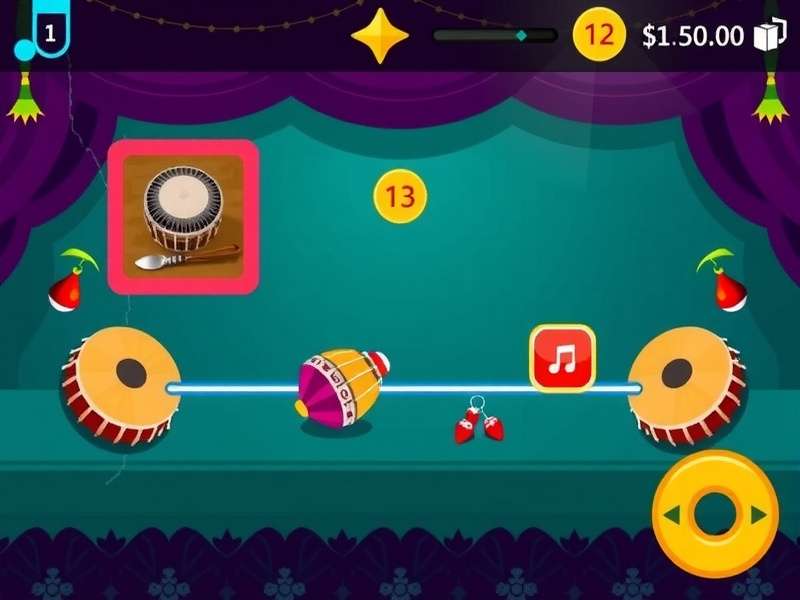
Developed by a passionate team of Indian game developers who wanted to create something that truly represented their culture, Jhumka Rhythm Quest features original music compositions inspired by various regions of India, from the energetic beats of Punjab to the soulful melodies of Rajasthan. The game's name itself references the traditional Indian earring (jhumka) that dances with every movement, much like how players' fingers dance across their screens to the rhythm.
At its core, Jhumka Rhythm Quest follows the familiar rhythm game formula where players must tap, swipe, and hold notes as they appear on screen in time with the music. However, what sets this game apart is its unique integration of Indian musical elements and cultural references throughout every aspect of gameplay.
The game features multiple difficulty levels to cater to both casual players and rhythm game veterans:
Each song in Jhumka Rhythm Quest is divided into multiple sections, with visual cues indicating changes in rhythm or intensity. The game uses a colorful, intuitive interface that makes it easy to follow the beat, even for those new to rhythm games.
One of the most distinctive features of Jhumka Rhythm Quest is its use of traditional Indian musical instruments. While many rhythm games rely on electronic or Western instruments, this game brings the sounds of India to the forefront:
These instruments aren't just for show - they're integral to the gameplay experience. Players must learn to recognize the different sounds and rhythms each instrument produces to master the more complex levels.
Jhumka Rhythm Quest goes beyond just music by incorporating elements of Indian culture and folklore into its story mode. As players progress through the game, they unlock chapters that tell the story of a young musician's journey across India to learn from different masters and preserve traditional music.
Each region visited in the story mode introduces new musical styles and instruments, with beautifully illustrated cutscenes that showcase Indian art and architecture. This narrative approach not only makes the gameplay more engaging but also serves as an educational tool about India's rich cultural heritage.
Since its release, Jhumka Rhythm Quest has seen phenomenal success in the Indian market, quickly becoming one of the most downloaded rhythm games in the country. The game's appeal lies in its authentic representation of Indian culture combined with accessible gameplay mechanics that appeal to a wide audience.
The game's popularity isn't limited to just major metropolitan areas - it has found success across both urban and rural India. This widespread adoption can be attributed to several factors:
An analysis of the player base reveals an interesting demographic distribution:
This data shows that Jhumka Rhythm Quest appeals to a broad audience, with significant representation across different age groups and backgrounds. The game's ability to bridge generational gaps through music is particularly noteworthy.
The Indian gaming community has embraced Jhumka Rhythm Quest with enthusiasm, as evidenced by the overwhelmingly positive reviews across app stores and social media platforms. Let's examine what players are saying about their experience with the game.
Players consistently praise several aspects of Jhumka Rhythm Quest:
While the reviews are overwhelmingly positive, some players have offered constructive feedback:
The development team has actively responded to this feedback, with several of these suggestions already being implemented in recent updates or planned for future releases.
Here are some verbatim quotes from Indian players that capture the essence of the community's sentiment:
"As a Carnatic music student, I'm thrilled to see our traditional instruments featured in a modern game. The mridangam patterns are surprisingly accurate!" - Priya R., Chennai
"I've never been into rhythm games before, but this one hooked me instantly. The music is so catchy, and I love learning about different Indian cultures through the story mode." - Rajesh K., Lucknow
"Finally a game that makes me proud to be Indian! I've shown this to my cousins in Canada, and they're amazed by how cool our traditional music can be when presented like this." - Anika S., Mumbai
"The difficulty curve is perfect. I started on easy and now I'm crushing expert levels. My hand-eye coordination has improved so much from playing this daily!" - Arjun P., Bangalore
One of the key factors behind Jhumka Rhythm Quest's success in India is its comprehensive localization strategy that goes beyond simple language translation. The developers have made a concerted effort to adapt the game to different regions and cultural contexts within India, creating a truly inclusive experience.
The game is available in multiple Indian languages, with full voice acting and text translation for:
This extensive language support ensures that players can fully immerse themselves in the game's story and instructions without language barriers. The developers even worked with regional music experts to ensure that pronunciations in the story mode's voice acting were accurate.
A unique feature of Jhumka Rhythm Quest is its regional music packs, which allow players to download additional songs specific to different parts of India. These packs include:
These regional packs not only provide more content for players but also help preserve and promote lesser-known musical traditions from across India. A portion of the proceeds from these packs goes directly to local music conservation initiatives.
The development team worked closely with cultural consultants from various regions to ensure that all representations in the game were respectful and accurate. This included:
This attention to detail has been widely appreciated by players, who feel that the game genuinely respects and celebrates their culture rather than simply using it as a superficial theme.
To keep the game feeling fresh and culturally relevant, the developers release special festival-themed updates throughout the year. These updates include:
These limited-time events not only provide new content but also educate players about different Indian festivals and their significance.
The vibrant community around Jhumka Rhythm Quest has produced a wealth of player-created content, from detailed guides to organized events that celebrate both the game and Indian culture. Let's explore some of these community-driven initiatives.
Experienced Indian players have shared numerous strategies to help newcomers improve their skills:
Many players struggle with the complex tabla rhythms in higher difficulty levels. A popular guide by player "RhythmMaster22" from Delhi suggests:
"Start by isolating the bass (dum) and treble (te) sounds. Practice tapping these separately on your desk to get the rhythm in your muscle memory. Then gradually combine them while listening to the actual tabla tracks on YouTube to understand the nuances."
Player "CarnaticQueen" from Chennai created a comprehensive guide for tackling the different regional song styles:
"South Indian songs often have more complex melodic patterns, so focus on the sitar or veena notes for timing. North Indian tracks usually have stronger percussion, so watch the tabla or dhol for cues. Practice each region separately before mixing them up."
With intermittent internet connectivity being an issue for many Indian players, "GamingGuru" from Kolkata shared offline practice methods:
"Use the practice mode extensively when you have a good connection to download songs. Then you can play them offline anytime. Also, try clapping along to Indian radio stations to improve your rhythm sense without needing the game."
The game's popularity has led to the organization of numerous local events across India, from casual meetups to competitive tournaments:
These events not only foster community spirit but also help promote Indian culture to younger generations in an engaging, interactive way.
Indian players have formed active communities on various social media platforms to share tips, discuss strategies, and organize events:
The developers actively participate in these communities, often hosting Q&A sessions, sharing sneak peeks of upcoming content, and even implementing player suggestions directly into the game.